
Electric Jigsaws, designed for both figured and straight cuts in wood and similar materials, require careful operation following all provided instructions.
Understanding the tool’s purpose and adhering to safety guidelines is paramount for preventing electric shock and ensuring safe usage.
What is a Jigsaw?
A jigsaw, also known as a saber saw, is a versatile power tool primarily utilized for making intricate cuts in a variety of materials, most commonly wood, but also including metal, plastic, and ceramic tile with the appropriate blades.
Unlike circular saws which excel at straight cuts, jigsaws are renowned for their ability to navigate curves and complex shapes. This functionality stems from a reciprocating blade – one that moves up and down – allowing the user to steer the cut in any direction.
The tool’s design incorporates a narrow blade protruding from a supporting frame, enabling cuts to be started mid-sheet, without needing a leading edge. Electric jigsaws are designed for figured and straight cuts, demanding adherence to all safety instructions to avoid electric shock and ensure proper operation.
Common Uses for a Jigsaw
Jigsaws are incredibly versatile tools employed in a wide range of projects. They are frequently used for cutting curves, intricate designs, and irregular shapes in wood, making them ideal for crafting, woodworking, and DIY projects like creating puzzle pieces or decorative elements.
Beyond curves, jigsaws effectively handle straight cuts, particularly when a circular saw is impractical or too cumbersome. They’re often used for cutting holes in countertops for sinks or appliances, and for trimming doors and molding.
With the correct blade, jigsaws can even cut through metal, plastic, and tile, expanding their utility. Remember to always follow safety warnings and instructions when operating this power tool, as it can be dangerous if misused.

Jigsaw Safety Precautions
Prior to operation, meticulously read all safety warnings and instructions to mitigate the risk of electric shock and ensure safe, responsible tool handling.

General Power Tool Safety
Workplace safety is crucial; maintain a clean, well-lit work area free from clutter to prevent accidents and ensure efficient operation of the jigsaw.
Always be aware of your surroundings and keep bystanders at a safe distance during tool usage, as flying debris or accidental contact can cause injury.
Avoid operating power tools under the influence of drugs, alcohol, or medication that may impair judgment or coordination, as this significantly increases the risk of accidents.
Dress appropriately for the task, wearing safety glasses or a face shield to protect your eyes from flying particles, and avoid loose clothing or jewelry that could get caught in the moving parts.
Never force a power tool; let the tool do the work at its own pace, as forcing it can lead to damage, overheating, or potential injury.

Secure your workpiece firmly to prevent movement during cutting, utilizing clamps or a vise to ensure stability and accuracy.
Machine-Specific Safety Warnings
Read all instructions carefully before operating the jigsaw; failure to follow these guidelines may result in electric shock, fire, or serious injury.
Always disconnect the jigsaw from the power source before making any adjustments, changing blades, or performing maintenance to prevent accidental activation.
Be aware of hidden hazards such as electrical wiring or plumbing within the cutting area, and take appropriate precautions to avoid contact.
Never operate the jigsaw with damaged cords or plugs; immediately replace any damaged components to prevent electrical hazards.
Maintain a firm grip on the jigsaw during operation, and avoid overreaching or working in awkward positions that could compromise control.
Ensure the blade is securely clamped before starting the cut, and inspect it regularly for signs of wear or damage.
Electrical Safety Guidelines
Never use the power cord to carry, pull, or unplug the jigsaw; always grasp the plug itself to avoid damaging the cord and creating a shock hazard.
Keep the power cord away from heat, oil, sharp edges, and moving parts to prevent insulation damage and potential electrical exposure.
Inspect the cord before each use for any signs of damage, such as cracks, fraying, or exposed wires, and replace it immediately if necessary.
Use a properly grounded outlet and avoid using extension cords unless absolutely necessary; if an extension cord is used, ensure it is of the correct gauge and rating.
Avoid operating the jigsaw in damp or wet conditions, as water can increase the risk of electric shock.
Do not modify the plug in any way, as this could compromise its grounding effectiveness and create a safety hazard.

Understanding Jigsaw Components
Familiarize yourself with the jigsaw’s housing, grip, blade types, base plate, power switch, and trigger lock for optimal control and safe operation.
Jigsaw Housing and Grip
The jigsaw housing encases the internal mechanisms, providing protection and structural integrity to the power tool. It’s crucial to maintain the housing’s cleanliness, removing any accumulated dust or debris to prevent overheating and ensure proper ventilation.
The grip, ergonomically designed, is a vital component for user comfort and control during operation. A secure grip minimizes fatigue and maximizes precision, especially during prolonged use or intricate cuts. Always ensure a firm hold on the grip before initiating any cutting action.
Inspect the housing regularly for any signs of damage, such as cracks or breaks, and discontinue use if any are detected. A compromised housing can pose a safety hazard, potentially exposing internal components and increasing the risk of electric shock. Proper housing maintenance contributes significantly to the tool’s longevity and safe operation.
Blade Types and Selection
Jigsaw blades are diverse, categorized by tooth configuration and material, influencing cutting performance. Selecting the correct blade is paramount for achieving clean, efficient cuts in various materials. Blades with finer teeth are ideal for smooth cuts in wood, while coarser teeth excel at faster cutting through thicker materials.
Consider the material – wood, metal, plastic – when choosing a blade. Specialized blades exist for each, optimizing cutting speed and minimizing damage. High-speed steel (HSS) blades are suitable for softer metals, while bi-metal blades offer enhanced durability for tougher applications.
Proper blade selection ensures optimal results and extends blade life; Always inspect blades for sharpness and damage before use, replacing dull or broken blades immediately to maintain safety and cutting precision.
Base Plate and Adjustment
The base plate, a crucial jigsaw component, provides stability and guides the cutting process. It’s typically adjustable, allowing for bevel cuts at various angles. Loosening the base plate locking mechanism enables tilting, while tightening secures the desired angle.
Accurate adjustment is vital for precise angled cuts. Many jigsaws feature a scale indicating the bevel angle, aiding in setting the correct position. Regularly check the base plate’s tightness to prevent shifting during operation, which can compromise cut accuracy and safety.
Maintaining a flat and secure base plate is essential. Inspect for damage or wear, replacing it if necessary. A stable base plate contributes significantly to clean, controlled cuts and overall tool performance.
Power Switch and Trigger Lock
The power switch, typically a start button, initiates jigsaw operation. It’s designed for momentary activation, requiring continuous pressure to maintain power. However, most jigsaws incorporate a trigger lock mechanism for extended use.
Engaging the trigger lock allows the jigsaw to run continuously without holding the trigger, reducing user fatigue during prolonged cutting tasks. Before locking, ensure a firm grip and clear workspace. To disengage, depress the trigger, releasing the lock.
Always return the jigsaw to the “off” position when not in use, even with the trigger lock disengaged. Never transport or store the tool with the trigger lock engaged, preventing accidental activation and potential hazards.

Operating the Jigsaw
Jigsaws are activated using the start button, and can be locked for continuous operation; always turn off after completing a cut, and before removal.
Turning the Jigsaw On and Off
Initiating operation of the jigsaw is achieved by depressing the start button, which activates the motor and blade. Many jigsaws incorporate a trigger lock feature, allowing for sustained operation without continuous pressure on the trigger – engage this cautiously.
To deactivate the tool, release the trigger; the jigsaw should immediately cease operation. Always ensure the blade comes to a complete stop before setting the tool down or attempting any adjustments.
In the event of jamming during a cut, immediately release the trigger to halt the blade. Do not attempt to force the jigsaw free while it’s powered; disconnect the power source before attempting to dislodge the blade. Following these procedures ensures safe and controlled operation, minimizing risks associated with accidental activation or blade movement.
Remember to always turn off the jigsaw after completing the cut and before removing it from the material.
Making Straight Cuts
Achieving precise straight cuts with a jigsaw requires careful preparation and technique. Begin by marking a clear, defined cutting line on the workpiece. Utilize a guide, such as a straight edge clamped firmly to the material, to maintain accuracy throughout the cut.
Position the jigsaw’s base plate securely against the guide, ensuring it remains in contact throughout the entire cutting process. Initiate the cut at a slow, controlled pace, allowing the blade to establish a stable path.
Maintain consistent forward pressure, guiding the jigsaw along the line without forcing it; Avoid excessive speed, which can lead to wandering or inaccurate cuts. Regularly check alignment with the guide to ensure the blade remains on course. A steady hand and proper technique are crucial for achieving clean, straight results.
Making Curved Cuts
Executing curved cuts with a jigsaw demands a different approach than straight cuts. Select a blade appropriate for curves – a shorter, narrower blade generally offers greater maneuverability. Initiate the cut slowly, and gently steer the jigsaw along the desired path.
Avoid forcing the blade; let it naturally follow the curve. Reduce forward pressure and rely on subtle directional adjustments. For tighter curves, you may need to momentarily pause and reposition the jigsaw to maintain control.
Consistent speed is key; a slower pace allows for greater precision. Anticipate the curve and adjust your steering accordingly. Practice on scrap material to develop a feel for the tool’s responsiveness and refine your technique for smooth, accurate curved cuts.
Adjusting Cutting Speed
Jigsaws typically feature variable speed control, crucial for adapting to different materials and cut types. Lower speeds are ideal for harder materials like metal or thick wood, minimizing heat buildup and providing greater control. Higher speeds suit softer materials like thin wood or plastic, enabling faster cutting.
Experimentation is key to finding the optimal speed for each application. Start with a lower speed and gradually increase it until you achieve a clean, efficient cut without excessive vibration or blade binding.
Observe the blade and material; if the blade overheats or the material melts, reduce the speed. Proper speed adjustment extends blade life, improves cut quality, and enhances overall safety during operation.

Jigsaw Maintenance
Regular maintenance, including blade replacement, cleaning, lubrication, and cord inspection, ensures optimal performance and extends the lifespan of your electric jigsaw.
Blade Replacement
Safely replacing the jigsaw blade is crucial for continued efficient operation. Always disconnect the jigsaw from the power source before attempting any blade changes to prevent accidental activation and potential injury.
Locate the blade clamp, typically a lever or screw, on the jigsaw. Release the clamp to loosen the existing blade. Carefully remove the old blade, noting its orientation for correct installation of the new one.
Insert the new blade fully into the blade holder, ensuring the teeth are facing the correct direction for cutting – generally downwards. Securely tighten the blade clamp, making sure the blade is firmly held in place.
A loose blade can cause inaccurate cuts and potentially break during operation, posing a safety hazard. Always verify the blade is properly secured before turning the jigsaw on.
Cleaning and Lubrication
Regular cleaning and lubrication are essential for maintaining the jigsaw’s performance and extending its lifespan. Before any maintenance, always disconnect the tool from the power supply. Remove any accumulated sawdust or debris from the blade area, base plate, and ventilation openings using a brush or compressed air.
Avoid using solvents, as they can damage plastic components. Periodically lubricate moving parts, such as the blade guide and pivot points, with a light machine oil. This ensures smooth operation and reduces friction.
Inspect the power cord for damage during cleaning. A damaged cord presents an electrical hazard and should be replaced by a qualified technician. Keeping the jigsaw clean and well-lubricated contributes to its efficiency and safety.
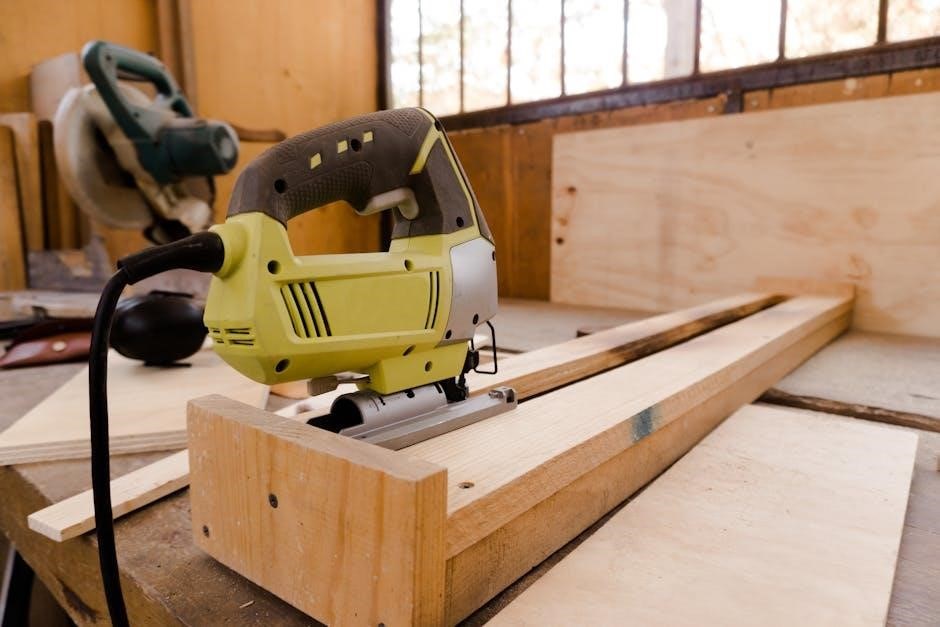
Cord Inspection and Care
Prior to each use, thoroughly inspect the power cord for any signs of damage, including cuts, abrasions, or exposed wires. A damaged cord poses a significant electrical shock risk and must never be used. Do not attempt to repair a damaged cord yourself; it should be replaced by a qualified service technician.
Avoid subjecting the cord to strain during operation. Never pull the cord to disconnect the jigsaw from the power outlet – grasp the plug instead. Keep the cord away from heat, oil, sharp edges, and moving parts.
After use, coil the cord loosely and store the jigsaw in a dry, safe location. Proper cord care extends the tool’s life and ensures safe operation.

Troubleshooting Common Issues
If jamming occurs, immediately turn off the jigsaw. Address motor overheating or power cord problems by disconnecting and seeking qualified service.
Jigsaw Jamming
Experiencing jigsaw jamming during operation can be frustrating and potentially damaging to both the tool and the workpiece. The immediate response to any jamming situation is to turn the jigsaw off. Do not attempt to force the blade free while the tool is powered; this could lead to injury or further complications.
Several factors can contribute to jamming. These include attempting to cut material that is too thick for the blade, feeding the jigsaw too aggressively into the cut, or encountering knots or inconsistencies within the wood. Before restarting, carefully assess the situation.
Ensure the blade is properly seated and not bent or damaged. Clear any debris from the cutting path. If the material is causing excessive resistance, consider using a blade designed for tougher materials or reducing the cutting speed. Always prioritize safety and avoid forcing the tool.
Motor Overheating
Motor overheating is a potential issue that can arise during extended jigsaw use, particularly when tackling demanding cuts or working in poorly ventilated areas. If the jigsaw begins to feel excessively hot to the touch, or if you detect a burning smell, immediately turn the tool off and disconnect it from the power source.
Prolonged operation under heavy load, a dull blade, or blocked ventilation can all contribute to overheating; Allow the motor to cool completely before attempting to resume work. Inspect the air vents to ensure they are free from dust and debris, as obstructions can restrict airflow.
Using the appropriate blade for the material and avoiding excessive pressure during cutting can also help prevent overheating. Regular maintenance and proper ventilation are key to maintaining optimal motor performance and extending the life of your jigsaw.
Power Cord Problems
Power cord issues represent a significant safety hazard and require immediate attention. Never use the cord to pull the plug from the outlet; always grasp the plug itself. Regularly inspect the cord for any signs of damage, including cuts, abrasions, or exposed wires. A damaged cord must be replaced immediately by a qualified technician.
Avoid operating the jigsaw with a frayed or damaged power cord, as this increases the risk of electric shock. Keep the cord away from heat, oil, sharp edges, and moving parts, as these can compromise its integrity. Do not attempt to repair a damaged cord yourself; professional repair is essential.

Ensure the cord is properly routed and secured during use to prevent tripping hazards and accidental damage. A well-maintained power cord is crucial for safe and reliable operation of your jigsaw.