Hockey Stick Size Guide: A Comprehensive Overview (Updated 02/07/2026)
Navigating hockey stick sizing is crucial for performance and comfort; this guide details lengths from youth (31-48 inches) to senior (51-61 inches), aiding players of all ages.
Selecting the correct hockey stick size is paramount for maximizing a player’s on-ice capabilities. This comprehensive guide, updated as of February 7th, 2026, aims to demystify the process. Proper sizing impacts puck control, shooting accuracy, and overall comfort. Considerations extend beyond simple height charts, encompassing age, skill level, and playing position. We’ll explore key measurements – length, blade length, flex, and lie – to ensure an optimal fit. Understanding these elements is the first step towards enhancing your game and preventing injury.
II. Why Proper Hockey Stick Size Matters
An ill-fitting hockey stick significantly hinders performance. Too long a stick reduces control and quickness, while a stick that’s too short limits reach and shooting power. Correct length enables a proper shooting motion and efficient puck handling. Incorrect flex impacts shot velocity and accuracy, potentially leading to fatigue. Furthermore, improper sizing can contribute to poor posture and increased risk of injury. Investing time in finding the right fit translates to improved skills, greater confidence, and a more enjoyable hockey experience.
III. Key Measurements for Hockey Sticks
Several critical measurements determine a hockey stick’s suitability. Overall length, measured from the heel to the toe, impacts reach and control. Blade length influences puck handling and shooting capabilities. Shaft flex, indicating stiffness, affects shot power and accuracy based on player weight. Finally, lie angle, the angle between the shaft and blade, dictates puck positioning and shooting comfort. Understanding these measurements is fundamental to selecting a stick optimized for individual needs and playing style.
A. Overall Length
Overall length is the primary measurement for hockey stick sizing, ranging from youth sticks at approximately 31-48 inches to senior models extending to 51-61 inches. A proper length allows players to maintain control and reach the puck effectively. Generally, shorter sticks enhance maneuverability, while longer sticks offer greater reach and power. Determining the ideal length often correlates with a player’s height, but individual preference and playing style also play significant roles in optimal selection.
B. Blade Length
Blade length significantly impacts puck handling and shooting capabilities. Shorter blades, favored by skilled dekeing players, provide enhanced puck control and quick release. Conversely, longer blades offer a larger surface area for powerful shots and improved accuracy. Blade lengths vary, influencing a player’s ability to lift the puck and maintain possession. Selecting the appropriate blade length depends on individual playing style and position, balancing maneuverability with shooting power.
C. Shaft Flex
Shaft flex, measured in units of resistance to bending, is critical for shot power and accuracy. Lower flex (softer sticks) are easier to load, ideal for players prioritizing quick releases and wrist shots. Medium flex offers a balance, suitable for versatile players. Higher flex (stiffer sticks) require more strength to load but deliver maximum power, favored by hard shooters. Flex selection should align with player weight and strength, optimizing energy transfer during shooting.
D. Lie
Lie angle determines how a stick sits on the ice and impacts puck control and shooting accuracy. Right-handed lie angles are positioned for players who hold the stick on their right side, while left-handed lie angles are for those holding it on the left. An incorrect lie angle can cause missed passes or shots, as the blade won’t maintain consistent contact with the ice. Proper lie ensures optimal puck handling and a more efficient shooting motion.
IV. Hockey Stick Sizing Charts by Age Group
Accurate sizing varies significantly with age and physical development. Youth players (6-8 years) typically require sticks between 31-48 inches, while juniors (7-13 years) generally use 44-51 inch sticks. Intermediate players (13-15 years) often fit into the 51-59 inch range. Senior players (15+ years) usually need sticks from 55-61 inches, though individual height and playing style are crucial considerations beyond just age.
A. Youth Hockey Stick Sizes (6-8 years)
For young players aged 6-8, selecting the correct stick is paramount for skill development. Recommended lengths generally fall between 31 and 48 inches (97cm ‒ 142cm), with blade lengths around 45-49 inches (114cm ౼ 124cm). Prioritize lighter-weight sticks with lower flex to allow for easier handling and shooting. Proper fit encourages confidence and fosters a positive early hockey experience, aiding fundamental skill acquisition.
B. Junior Hockey Stick Sizes (7-13 years)
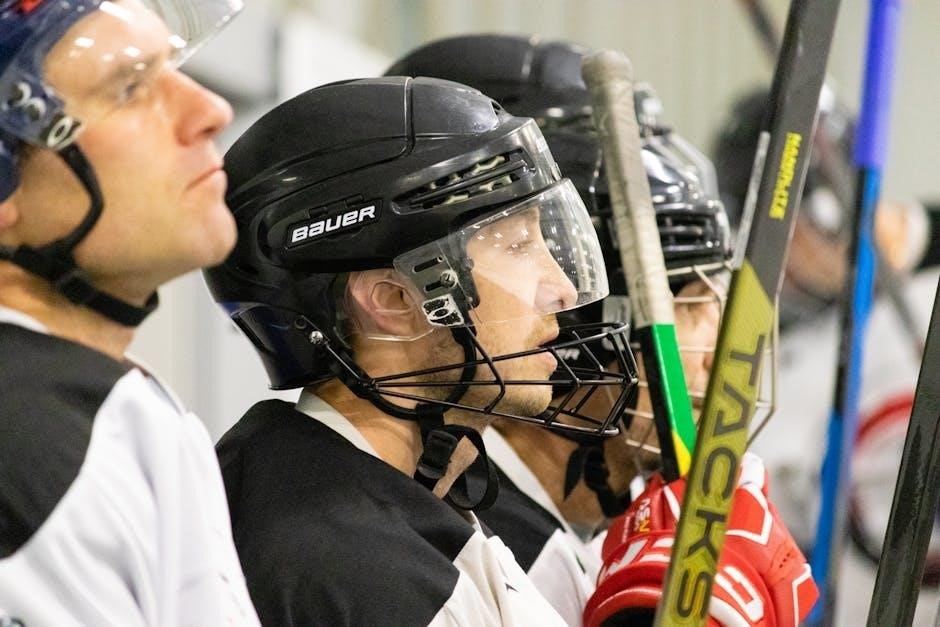
As players grow between 7 and 13 years old, their equipment needs evolve. Junior sticks typically range from 44 to 51 inches (132cm ౼ 155cm) in length, with blade lengths spanning 50 inches and beyond. Flex becomes increasingly important, balancing power and control as strength develops. Consider the player’s growing body and skill level when choosing, ensuring a comfortable and effective fit that supports continued progress on the ice.
C. Intermediate Hockey Stick Sizes (13-15 years)
For players aged 13 to 15, transitioning to intermediate sizes is key. Sticks generally measure between 51 and 59 inches (130cm ‒ 150cm), offering a balance between youth and senior models. Flex selection is critical during this period of rapid physical development, influencing shot power and accuracy. Careful consideration of height, weight, and skill level ensures optimal performance and prevents hindering growth or technique development on the ice.
D. Senior Hockey Stick Sizes (15+ years)
Senior hockey sticks cater to players aged 15 and above, offering the widest range of customization. Lengths typically span from 55 to 63 inches (140cm ‒ 160cm), with flexes varying significantly to accommodate diverse player weights and shooting styles. Experienced players often fine-tune their stick choice based on position, preferring stiffer flexes for powerful shots or softer flexes for enhanced puck control. Proper fitting is paramount for maximizing performance and minimizing injury risk.
V. Determining Stick Length Based on Height
Height is a primary factor in selecting the correct stick length, though individual preference plays a role. Players under 5’0” generally benefit from a 50-inch stick, while those between 5’0” and 5’4” often use a 54-inch model. Individuals ranging from 5’4” to 5’8” typically find a 56-inch stick suitable, and those exceeding 5’8” often opt for 58-60 inch sticks. Remember to consider reach and comfort when making your final decision.
A. Players Under 5 Feet Tall
For players under 5 feet tall, prioritizing control and maneuverability is key. A 50-inch hockey stick is generally recommended, providing a comfortable reach without sacrificing agility. Younger or smaller players will find this length easier to handle during skating and stickhandling drills. Ensuring the stick isn’t overly long prevents awkwardness and promotes proper technique development. Consider a lighter weight stick for enhanced control.
B. Players Between 5’0″ and 5’4″
Players ranging from 5’0″ to 5’4″ typically benefit from a 54-inch hockey stick, offering a balance between reach and control. This length allows for effective puck handling and shooting while maintaining maneuverability. It’s crucial to consider individual skill level and playing style; a slightly shorter stick (52-53 inches) might suit players prioritizing quick dekes. Proper stick length ensures a comfortable shooting position and efficient power transfer.
C. Players Between 5’4″ and 5’8″
For players between 5’4″ and 5’8″, a 56-inch hockey stick is generally recommended, providing a good balance of reach and control for various playing styles. Some may find a 55-inch stick preferable for enhanced agility. Consider your position; defensemen often favor slightly longer sticks for increased reach during puck battles. Ensuring the stick allows for a comfortable bend in the elbows during shooting is paramount for maximizing power and accuracy on the ice.
D. Players Over 5’8″
Players exceeding 5’8″ typically benefit from a 58 to 61-inch hockey stick, offering extended reach for puck handling and shooting. Taller individuals may even require a 61-inch stick. Defensive players often lean towards the longer end of this range for superior gap control. Proper sizing ensures a comfortable shooting position, with slightly bent elbows, maximizing power transfer. Experimentation within this range is encouraged to find the optimal length for individual preference and playing style.
VI. Understanding Shaft Flex and Player Weight
Shaft flex, measured in numbers, indicates how much force bends the stick; lower numbers (softer flex) suit lighter players (under 150lbs), enabling easier puck loading and quicker releases. Medium flex (50-60) is ideal for players between 150-180lbs, offering a balance of power and control. Heavier players (over 180lbs) benefit from high flex (60+), providing maximum power and preventing excessive bending, crucial for strong, accurate shots.
A. Low Flex (Softer Sticks)
Low flex hockey sticks, typically ranging from 30 to 50, are designed for players with lighter builds or those prioritizing quick releases and puck feel. These sticks bend easily, requiring less force to load a shot, making them excellent for developing players or those focusing on finesse. They’re often favored by younger players and those under 150 pounds, enhancing their ability to control the puck and generate wrist shots effectively.
B. Medium Flex
Medium flex hockey sticks, generally falling between 50 and 70, represent a versatile option suitable for a broad range of players. Offering a balance between responsiveness and power, these sticks accommodate players weighing between 150 and 180 pounds. They provide a good compromise for those seeking both quick releases and the ability to generate harder shots, making them popular among intermediate and developing players across various positions.
C. High Flex (Stiffer Sticks)
High flex hockey sticks, typically ranging from 70 to 90 or higher, are designed for powerful players who prioritize shot velocity over quick release. These stiffer shafts require more strength to load but deliver substantial energy transfer, ideal for players exceeding 180 pounds. Commonly favored by experienced players and those with strong upper body strength, high flex sticks enhance shooting accuracy and power, particularly for slap shots;
VII. Lie Angle Explained
Lie angle refers to the angle between the shaft of the stick and the blade. It’s crucial for proper puck handling and shooting. Right-handed sticks have a lie angle that allows the blade to lie flat when the player is in their shooting stance, with the heel elevated. Conversely, left-handed sticks are mirrored. An incorrect lie angle hinders puck control, leading to missed passes and inaccurate shots; proper alignment ensures optimal performance.
A. Right-Handed vs. Left-Handed Lie
Determining handedness is the first step in selecting the correct lie angle. Right-handed players hold the stick with their left hand at the top, while left-handed players do the opposite. A right-handed lie has the blade angled so the heel is higher during a shooting stance, facilitating power. Left-handed lies mirror this. Choosing the wrong handedness dramatically impacts shooting accuracy and puck control, making comfortable and effective play difficult.
B. Impact of Lie Angle on Puck Control
The lie angle significantly influences a player’s ability to maintain puck control. An incorrect lie causes the blade to either lift off the ice too easily or dig in excessively. This results in inconsistent puck handling, difficulty receiving passes, and reduced responsiveness during quick movements. A proper lie ensures the blade remains flat on the ice, providing optimal control for stickhandling, passing, and shooting, ultimately enhancing overall game performance.
VIII. Blade Length Considerations
Blade length is a key factor influencing a player’s style. Shorter blades (around 10-12 inches) excel in quick dekes and close-quarters puck handling, favored by skilled playmakers. Conversely, longer blades (12-15 inches) provide a larger surface area for powerful shots and improved reach during battles for the puck. Selecting the appropriate blade length depends on individual preferences and the demands of their playing position, optimizing both offensive and defensive capabilities.
A. Shorter Blades for Dekeing
Shorter hockey stick blades, typically ranging from 10 to 12 inches, significantly enhance a player’s ability to perform quick and deceptive dekes. The reduced blade surface area allows for faster puck movement and tighter control, enabling agile maneuvers around opponents. This blade length is particularly beneficial for players prioritizing puck handling skills and creative offensive plays, facilitating rapid changes in direction and elusive stickwork.
B. Longer Blades for Shooting
Longer hockey stick blades, generally between 12 and 15 inches, are favored by players who prioritize shooting power and accuracy. The extended surface area provides a larger sweet spot for puck contact, maximizing energy transfer and resulting in harder, more precise shots. This blade length offers increased leverage and control during shooting motions, making it ideal for players focused on offensive firepower and scoring goals from distance.
IX. Adjusting Stick Length: Cutting the Shaft
Carefully cutting a hockey stick shaft allows for personalized length adjustments, optimizing performance. It’s crucial to measure precisely and cut conservatively, as shortening is permanent. Professionals recommend having a qualified hockey equipment retailer perform the cut to ensure a clean, even edge and prevent damage to the shaft’s integrity. Always consider your playing style and height when determining the ideal length before making any cuts.
X. Grip Tape and its Influence on Feel
Grip tape significantly impacts a player’s control and comfort, influencing the overall feel of the stick. Different thicknesses and textures cater to varying preferences; thicker tape provides a more cushioned grip, while thinner tape offers enhanced stick feel. Applying tape correctly, overlapping layers strategically, is vital for durability and optimal performance. Regularly replacing worn grip tape maintains a secure hold and prevents slippage during play.
XI. Common Mistakes in Hockey Stick Sizing
Incorrect sizing is a frequent issue, often stemming from relying solely on age rather than height and weight. Players often choose sticks too long, hindering maneuverability, or too short, reducing reach and power. Ignoring shaft flex – matching it to weight – is another error. Failing to consider position-specific needs, like longer reach for defensemen, also impacts performance. Prioritizing brand over fit, and neglecting professional fitting advice, leads to suboptimal results.
XII. Hockey Stick Size Guide for Different Positions
Position significantly influences optimal stick size. Forwards generally prefer shorter sticks (52-54 inches) for quicker puck handling and agility. Defensemen often opt for longer sticks (56-60 inches) to extend their reach for poke checks and passing lanes. Goalies require specialized, larger paddle goal sticks, prioritizing blocking ability over shooting. Considering these positional nuances ensures players have equipment tailored to their role, maximizing on-ice effectiveness.
A. Forward Sizing
Forwards typically benefit from sticks enabling quick release and maneuverability. A common range is 52 to 54 inches, though individual height and playing style are key. Shorter sticks (around 52 inches) aid in close-quarters deking and fast shots in tight spaces. Players prioritizing reach might lean towards 54 inches. Flex should complement weight; lighter players favor lower flex for easier puck handling, while stronger players can manage higher flex for power.
B. Defenseman Sizing
Defensemen generally require sticks offering reach and shot power for clearing the zone and delivering slap shots. Lengths often fall between 54 and 60 inches, depending on height. A longer stick provides a greater reach for poke checks and intercepting passes. Higher flex is common, allowing defensemen to load up for powerful shots. Consider a stick that balances reach with maneuverability for effective puck movement and defensive coverage.
C. Goalie Stick Sizing
Goalie sticks differ significantly, prioritizing paddle size and lie angle over overall length. Lengths typically range from 45 to 52 inches. Paddle width impacts net coverage, with wider paddles favored by some. Lie angle is crucial for puck handling and directing rebounds. Goalies often prefer a lower flex for quicker reaction time and control. Proper sizing ensures optimal puck control and effective blocking, vital for defensive success.
XIII. The Hockey Stick Chart Pattern in Trading (Brief Mention)
Interestingly, a “hockey stick” pattern appears in financial trading, mirroring the stick’s shape. This signifies a period of flatness followed by a rapid, steep increase. Traders identify this pattern to anticipate potential upward momentum in asset prices. While unrelated to equipment sizing, the term’s visual similarity highlights pattern recognition’s importance across diverse fields, from sports to finance.
XIV. Resources for Finding Hockey Stick Size Guides
Numerous online resources assist in finding the perfect fit. Retailers like Grays Hockey offer detailed guides alongside their equipment, including shoes. Google Docs provides templates for tracking sizes, enhancing organization. Exploring online learning centers offers tutorials and tips for customization. Websites dedicated to hockey equipment reviews often feature comprehensive sizing charts, ensuring players select appropriate sticks for optimal performance and comfort.
XV. Grays Hockey Guides and Equipment
Grays Hockey provides extensive sizing guidance alongside its premium equipment range. Their resources detail stick lengths correlated with age and height, ensuring a proper fit for developing players. Beyond sticks, Grays offers specialized hockey shoes, complementing overall performance. Detailed charts assist in selecting the correct flex and lie angle, maximizing control and shot power. Grays’ commitment extends to comprehensive support, helping players optimize their gear selection.
XVI. Kookaburra Hockey Equipment
Kookaburra Hockey delivers a diverse range of equipment, with sizing guides to match. They emphasize selecting the appropriate stick length based on player height, mirroring industry standards. Kookaburra’s resources cover youth, junior, and senior categories, ensuring accurate fits for all skill levels. Alongside sticks, they offer protective gear and apparel, completing a player’s setup. Their focus is on providing quality equipment and clear guidance for optimal performance on the field.
XVII. Using Google Docs for Tracking Equipment Sizes
Google Docs provides a convenient, collaborative platform for managing hockey equipment sizes. Create a spreadsheet to record player heights, preferred stick lengths, flex, and lie angles. This centralized document allows coaches and team managers to easily track and update information. Utilize shared access for seamless collaboration, ensuring everyone has the latest data. Google Docs’ accessibility features further enhance usability, making it ideal for organizing team equipment efficiently.
XVIII. Accessibility in Google Docs for Size Charts
Google Docs prioritizes accessibility when creating hockey stick size charts. Utilize headings, alt text for images, and clear table structures for screen reader compatibility. Employ sufficient color contrast for readability and ensure keyboard navigation is functional. Leverage Google’s built-in accessibility checker to identify and resolve potential issues. These features guarantee that size guides are inclusive, benefiting players and staff with diverse needs, fostering equitable access to vital equipment information.
XIX. Troubleshooting Issues with Hockey Stick Size
Common sizing problems include incorrect length leading to poor control, or unsuitable flex impacting shot power. If a stick feels too long, consider cutting it (professionally!). Flex issues manifest as difficulty bending the stick; adjust based on weight. Incorrect lie causes blade instability – assess puck handling. Regularly review charts, and don’t hesitate to seek a professional fitting to resolve persistent discomfort or performance limitations. Accurate sizing prevents injury and maximizes play.
XX. Tips for Formatting and Customizing Hockey Stick Size Charts
Effective charts utilize clear columns for age, height, and recommended length/flex. Employ bolding for key data points and consider color-coding for different age groups. Google Docs allows easy table creation and customization. Add notes regarding individual preferences (e.g., shooting style). Ensure accessibility with alt text for images. Regularly update charts with current sizing standards. Prioritize readability; a well-formatted chart simplifies the selection process, boosting confidence and performance.
XXI. Hockey Stick Size and Skill Level
Beginners often benefit from slightly longer sticks for increased control and a wider shooting platform. As skill develops, players may transition to shorter sticks for enhanced maneuverability and quicker releases. More advanced players often fine-tune flex based on shot power and preference. Consider a lower flex for developing players, allowing easier puck loading. Experimentation is key; skill level dictates the optimal balance between power, control, and responsiveness in stick selection.
XXII. The Importance of a Professional Fitting
While charts offer guidance, a professional fitting is invaluable. Experts assess stance, shooting style, and physical attributes for a truly customized recommendation. They’ll analyze lie angle, flex, and curve to optimize performance and prevent injury. A proper fit maximizes energy transfer, improves puck control, and boosts confidence on the ice. Don’t rely solely on estimations; invest in a fitting for a stick perfectly tailored to your unique needs and abilities.
XXIII. Conclusion: Finding Your Perfect Hockey Stick
Selecting the right hockey stick is a journey, not a destination. Consider age, height, weight, skill level, and playing position. Utilize sizing charts as a starting point, but prioritize a professional fitting for optimal results. Remember, shaft flex and lie angle significantly impact performance. Experimentation and adjustments are key to unlocking your full potential on the ice. Ultimately, the perfect stick enhances your game and fosters a love for hockey!