
Handle Manual: A Comprehensive Guide
This manual details handle design, materials, ergonomics, and applications for various tools, ensuring safety and efficiency.
It covers screwdriver, hammer, pliers, and wrench handles, alongside specialized features like insulation and T-handle variations.
What is a Handle?
A handle is the gripping component of a tool, facilitating control and the application of force. It’s the interface between the user and the tool’s functional end, crucial for both efficiency and safety. Typically, handles are crafted from materials like plastic, wood, metal, or composites, each offering unique properties.
Ergonomically designed handles prioritize comfort during prolonged use, minimizing hand fatigue and maximizing leverage. They aren’t merely attachments; they’re integral to a tool’s performance. The shape, texture, and material all contribute to a secure and comfortable grip.
Consider the screwdriver: its handle provides the torque needed to drive screws, while a hammer handle absorbs shock. Handles can also incorporate specialized features like insulation for electrical safety (VDE screwdrivers) or T-shapes for increased control. Ultimately, a handle transforms raw power into precise action.
The Importance of Handle Design
Handle design is paramount for tool effectiveness and user well-being. Ergonomics, comfort, and operator safety are driving factors, redefining tool use. A poorly designed handle can lead to hand fatigue, reduced control, and even injury during repetitive tasks. Constant use and wear are common problems addressed through thoughtful design.
Effective handle design considers grip, leverage, and shock absorption. For instance, hammer handles must mitigate impact, while screwdriver handles need to maximize torque application. The shape directly influences how force is transferred, impacting efficiency.
Furthermore, handle design impacts accessibility. A well-contoured handle allows for a secure grip in various positions, crucial for tasks in confined spaces. Ultimately, a superior handle isn’t just about comfort; it’s about enhancing performance and preventing strain, enabling operators to work longer and more effectively.
Handle Materials: An Overview
Handle materials significantly impact a tool’s durability, performance, and cost. Traditional wood handles offer a classic feel and robust construction, suitable for various applications. However, plastic handles provide versatility and cost-effectiveness, becoming increasingly common due to their moldability and resistance to wear.

Metal handles excel in strength and conductivity, often used in tools requiring high force or electrical grounding. Composite handles represent a modern approach, combining the benefits of multiple materials – for example, enhanced grip with shock absorption.
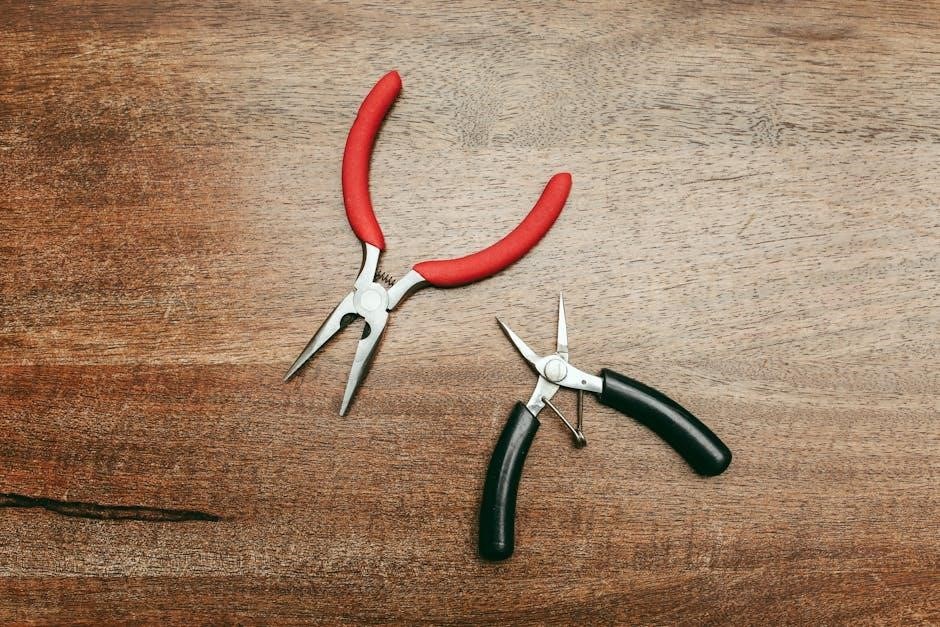
The choice depends on the tool’s intended use. Insulated handles, often made of specialized plastics, prioritize electrical safety (VDE standards). Material selection also considers factors like chemical resistance and temperature tolerance, ensuring longevity and reliable performance in diverse working conditions.
Wood Handles: Traditional and Durable
Wood handles represent a time-honored choice, valued for their natural grip and inherent durability. Historically, wood was the primary material, offering a comfortable feel even during prolonged use. Different wood species provide varying levels of strength and resistance to wear; hardwoods like oak and maple are particularly favored for demanding applications.
While requiring occasional maintenance – such as oiling to prevent drying and cracking – wood handles can last for generations with proper care. They offer a tactile experience often preferred by skilled tradespeople. However, wood is susceptible to moisture absorption and potential splintering.
Despite advancements in synthetic materials, wood remains a popular option, especially for tools where a classic aesthetic and comfortable grip are prioritized. Their inherent properties contribute to a balanced and reliable tool experience.
Plastic Handles: Versatility and Cost-Effectiveness
Plastic handles have become ubiquitous in modern hand tools, prized for their versatility, affordability, and resistance to many environmental factors. A wide range of polymers are employed, each offering unique properties – from rigid polypropylene to softer, more grippy materials like thermoplastic elastomers (TPE).
Plastic’s moldability allows for complex ergonomic designs, enhancing comfort and reducing hand fatigue. They are generally resistant to moisture, chemicals, and electrical conductivity (though specialized insulated plastics exist). Cost-effectiveness is a significant advantage, making plastic handles ideal for mass-produced tools.
However, plastic can be less durable than wood or metal, susceptible to cracking or deformation under extreme stress or prolonged UV exposure. Despite this, advancements in plastic technology continue to improve their strength and longevity, solidifying their position as a dominant handle material.
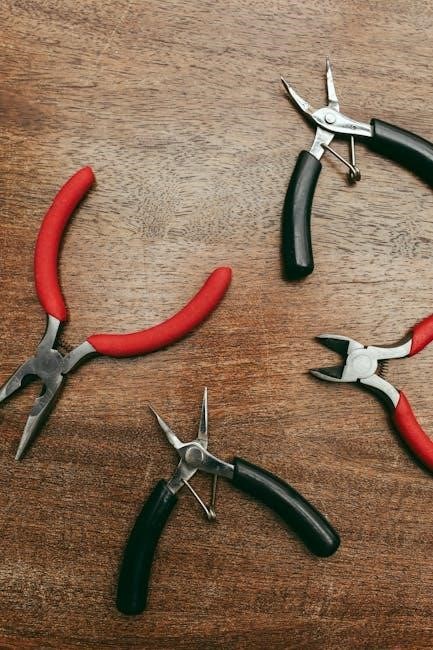
Metal Handles: Strength and Conductivity
Metal handles, traditionally forged from steel or alloys, offer unparalleled strength and durability, making them suitable for heavy-duty applications. Their robust construction withstands significant impact and torque, ensuring longevity even under harsh conditions. Metals like stainless steel provide corrosion resistance, extending the handle’s lifespan.
A key characteristic of metal handles is their thermal and electrical conductivity. While advantageous in certain applications – like dissipating heat – it necessitates insulation for electrical work, as highlighted by VDE screwdrivers. Metal allows for precise shaping and often features textured surfaces for improved grip.
However, metal handles can be heavier than plastic or wood alternatives and may become uncomfortably cold or hot to the touch depending on the ambient temperature. Despite these drawbacks, their inherent strength continues to make them a preferred choice for demanding tasks.

Composite Handles: Combining the Best of Both Worlds
Composite handles represent a modern advancement in tool design, skillfully blending the advantages of various materials to overcome individual limitations. Typically, these handles incorporate a core of materials like fiberglass or polymers, overmolded with a softer, more ergonomic grip – often rubber or thermoplastic elastomers (TPE).
This construction delivers a superior balance of strength, lightweight properties, and comfort. The core provides structural integrity and resistance to impact, while the outer layer enhances grip and reduces hand fatigue during prolonged use. Ergonomics, comfort, and operator safety are driving factors in composite handle design.
Composite materials also offer excellent vibration dampening, minimizing strain on the user’s hand and wrist. They are resistant to many chemicals and environmental factors, making them versatile for diverse applications. This combination of features makes composite handles increasingly popular across a wide range of tools.
Handle Ergonomics: Comfort and Safety
Handle ergonomics are paramount for user comfort, safety, and efficiency, especially during repetitive tasks. A well-designed handle minimizes strain, reduces the risk of musculoskeletal disorders, and enhances control. Ergonomics redefine tool use, prioritizing prolonged comfort and operator safety.
Key considerations include grip design to minimize hand fatigue, and shape to optimize torque application. Handles should conform naturally to the hand’s contours, distributing pressure evenly. Textured surfaces or overmolds improve grip, even in wet or oily conditions.
Vibration dampening is crucial, particularly with impact tools, to reduce hand-arm vibration syndrome (HAVS). The material composition and internal structure of the handle play a significant role in absorbing vibrations. Proper ergonomic design allows unskilled operators to perform tasks effectively, reducing wear and tear.
Grip Design and Hand Fatigue
Effective grip design is central to minimizing hand fatigue during tool use. Handles should conform to the natural contours of the hand, distributing pressure evenly to prevent localized stress points. A poorly designed grip forces users to exert excessive force, leading to quicker fatigue and potential injury.
Textured surfaces, often achieved through molded patterns or overmolds, significantly enhance grip security, reducing the need for a tight, fatiguing hold. Materials like soft-grip polymers provide cushioning and absorb vibrations, further lessening strain. The diameter of the grip must also be appropriate for the user’s hand size.
Ergonomic considerations extend to the shape of the grip; designs that promote a neutral wrist position are crucial. Avoiding sharp edges or awkward angles minimizes pressure on tendons and nerves, contributing to prolonged comfort and reduced fatigue during repetitive tasks.
Handle Shape and Torque Application
The shape of a handle profoundly impacts the user’s ability to apply torque effectively and safely. Straight handles generally offer consistent leverage, suitable for tasks requiring sustained force. However, angled or offset handles can provide improved access in confined spaces and alter the force vector for specific applications.
T-handles, for instance, maximize torque potential by allowing a two-handed grip and a longer lever arm. Their design facilitates applying significant rotational force with reduced effort; Conversely, pistol-grip handles offer enhanced control and maneuverability, particularly useful for tasks demanding precision.
Handle geometry must also account for the potential for twisting or slippage under load. Features like flared ends or contoured surfaces enhance grip security, preventing unintended movements and ensuring efficient torque transfer. Proper shape selection is vital for optimizing performance and minimizing strain.
Vibration Dampening in Handles
Prolonged exposure to tool vibration can lead to hand-arm vibration syndrome (HAVS), making vibration dampening a critical handle feature. Materials like rubber, gel, or specialized polymers are integrated into handle construction to absorb and dissipate vibrational energy.
Dual-material handles, combining rigid and flexible components, are common. The rigid portion provides structural integrity, while the softer material cushions the hand. Internal dampening systems, utilizing air pockets or viscous fluids, further reduce vibration transmission.
Effective dampening minimizes fatigue, improves control, and protects the user’s health. The level of dampening required depends on the tool’s application and the intensity of vibration generated. Ergonomic handle designs also contribute by promoting a relaxed grip, reducing the body’s natural tendency to amplify vibrations.
Types of Handles Based on Tool Application
Handle design is intrinsically linked to the tool’s intended use, dictating shape, material, and features. Screwdrivers, for instance, require handles optimized for torque and precision, varying between slotted, Phillips head, and Torx types.
Hammer handles prioritize shock absorption and control, often incorporating rubber grips or wood for dampening. Pliers handles emphasize grip and leverage, frequently featuring textured surfaces and ergonomic contours. Wrenches demand handles capable of transmitting high torque, with designs focusing on accessibility in confined spaces.
Specialized tools necessitate unique handle solutions. Insulated handles (VDE) ensure electrical safety, while T-handles provide increased torque for stubborn fasteners. Interchangeable handle systems offer adaptability, allowing users to customize tools for specific tasks.
Screwdriver Handles: Types and Features
Screwdriver handles are engineered for optimal grip and torque application, differing based on the screw head type. Ergonomically designed plastic or wood handles are typical, providing comfort and leverage.
Slotted screwdriver handles often feature a straightforward, cylindrical shape, prioritizing a firm hold during rotation. Phillips head screwdriver handle design incorporates contours to fit the hand securely, preventing slippage during application of force. Torx screwdriver handle specifications demand precision, with handles designed to minimize cam-out and maximize contact surface.
Beyond basic shapes, features like textured grips, bi-material construction (soft grip over hard plastic), and rotating end caps enhance usability. Insulated screwdrivers offer vital electrical safety, while bit-holding handles provide versatility.
Slotted Screwdriver Handle Considerations
Slotted screwdriver handles prioritize a secure and direct transfer of rotational force. Due to the simpler head design, handle ergonomics focus on maximizing grip strength and minimizing slippage during use. A cylindrical shape is common, offering a consistent feel and allowing for multiple hand positions.
Handle material is crucial; durable plastics or wood provide a robust foundation. Textured surfaces enhance grip, particularly when working in oily or wet conditions. The handle’s diameter must be comfortable for prolonged use, preventing hand fatigue.
Considerations extend to handle length, influencing leverage. Longer handles offer increased torque but may reduce maneuverability in tight spaces. A well-designed slotted screwdriver handle ensures efficient screw driving and minimizes the risk of damage to both the screw and the tool.
Phillips Head Screwdriver Handle Design

Phillips head screwdriver handles differ from slotted designs, demanding features that accommodate cam-out tendencies. Ergonomics prioritize maintaining consistent downward pressure alongside rotation, often incorporating larger handle diameters for enhanced control.
Handle materials frequently include textured plastics offering a comfortable and secure grip, even with significant force applied. The shape often features a slight bulge or contour to fit the palm naturally, reducing strain during extended use.
A key consideration is the handle’s ability to prevent slippage, as cam-out can lead to hand injuries. Some designs incorporate softer, overmolded grips for improved comfort and torque transmission. Length impacts leverage, but the focus remains on maintaining consistent contact with the screw head to avoid stripping.
Torx Screwdriver Handle Specifications
Torx screwdriver handles require precise design considerations due to the star-shaped bit’s unique engagement. Handles often feature a hexagonal bolster preventing rotation during high-torque applications, a crucial element for preventing hand fatigue and ensuring efficient fastening.
Material selection leans towards durable plastics or composite materials capable of withstanding substantial force without cracking or deforming. Textured grips are paramount, providing a secure hold even when dealing with stubborn or corroded fasteners.
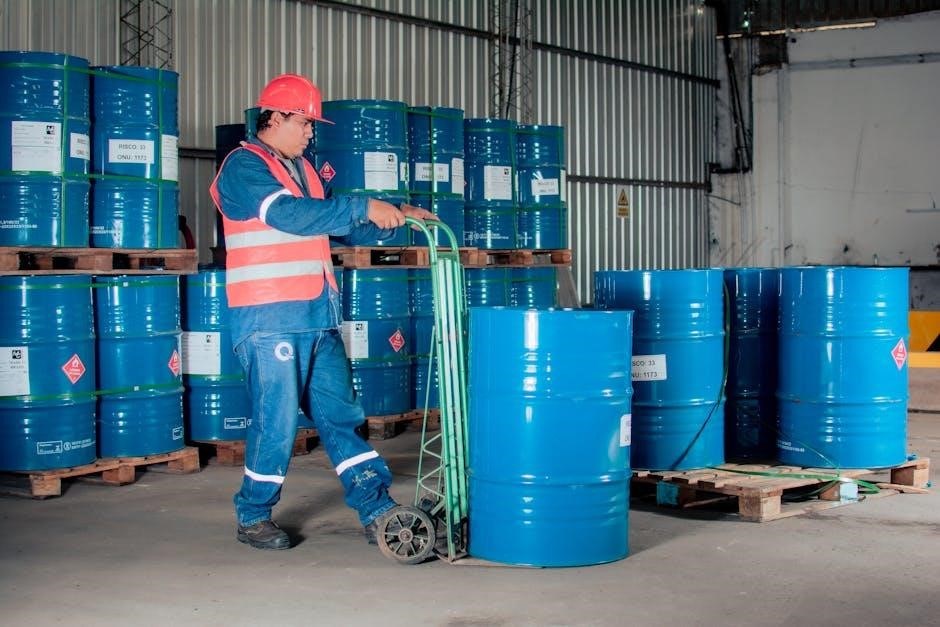
Handle length is a significant specification; longer handles offer increased leverage, ideal for larger Torx screws, while shorter handles provide greater maneuverability in confined spaces. Interchangeable handle systems are common, allowing users to adapt to various Torx sizes and applications. VDE-insulated options are available for electrical safety.
Hammer Handles: Shock Absorption and Control
Hammer handle design prioritizes shock absorption to minimize strain on the user’s arm and hand. Traditional wood handles, like hickory, possess natural shock-absorbing qualities, while modern fiberglass and composite handles are engineered for superior vibration dampening.
Handle shape and weight distribution are critical for control and balance. A well-balanced hammer reduces swing effort and improves accuracy. Ergonomic contours enhance grip comfort, preventing blisters and fatigue during prolonged use. Textured surfaces, often incorporating rubber overmolds, further improve grip security.
Secure attachment of the hammer head to the handle is paramount for safety. Steel wedges and epoxy adhesives are commonly employed to create a robust and lasting connection. Regular inspection of the handle for cracks or looseness is essential to prevent accidental separation during use.
Pliers Handle: Grip and Leverage
Pliers handles are designed to maximize grip strength and leverage for manipulating objects. Ergonomic designs are crucial, as pliers often require significant hand force. Comfort grips, frequently made of rubber or plastic over steel, reduce fatigue during extended use and provide a secure hold, even with wet or oily hands.
Handle length directly impacts leverage; longer handles provide greater mechanical advantage, useful for tasks requiring substantial force. However, excessively long handles can reduce precision. Handle shape also plays a role, with contoured grips fitting comfortably within the hand’s natural curves.
Some pliers feature adjustable handles or locking mechanisms to maintain grip pressure without constant squeezing. Insulated handles are vital for electrical work, providing protection against shocks; Regular inspection for cracks or damage is essential for safe operation.
Wrench Handles: Torque and Accessibility
Wrench handles are engineered to deliver maximum torque while allowing access to fasteners in confined spaces. Handle length is a primary factor; longer handles increase leverage, enabling tighter fastening or loosening of stubborn bolts. However, extended lengths can compromise maneuverability in tight areas.
Handle shape significantly impacts usability. Straight handles offer direct force application, while angled or offset handles improve access around obstructions. Ergonomic designs, often featuring cushioned grips, minimize hand fatigue during prolonged use. Material selection is crucial – steel handles provide durability, while composite materials can reduce weight.
Specialized wrench handles include T-handles for increased torque and control, and ratcheting handles for continuous tightening without repositioning. Insulated handles are essential for electrical safety. Regular inspection for cracks or wear is vital to maintain safe and effective operation.
Specialized Handle Features
Certain applications demand handles with unique characteristics beyond standard grip and leverage. Insulated handles (VDE) are paramount for electrical work, providing a protective barrier against shocks when working on live circuits – a critical safety feature. These handles undergo rigorous testing to meet stringent safety standards.
T-Handles offer enhanced torque and control, particularly useful for tasks requiring significant rotational force. Studded T-Handles provide a secure fastening point, while tapped T-Handles allow for versatile mounting options. Interchangeable handle systems represent a modern approach, allowing users to adapt a single handle to various tool bits or blades.
These systems maximize adaptability and reduce tool clutter. Ergonomic considerations remain vital even in specialized designs, ensuring comfort and minimizing strain. The choice of feature depends heavily on the specific task and safety requirements.
Insulated Handles (VDE): Electrical Safety
Insulated handles, often marked with VDE certification, are crucial for safeguarding users working with electricity. VDE (Verband der Elektrotechnik) signifies that the handle has undergone rigorous testing to ensure it can withstand high voltages without conducting electricity to the user. This protection is achieved through multiple layers of non-conductive materials encasing the tool’s metal shaft.
These handles aren’t simply coated; they’re molded for complete coverage and durability. Regular inspection is vital, as any cracks or damage compromise the insulation. VDE-certified screwdrivers, pliers, and other tools are essential for electricians and anyone performing electrical repairs.
Always verify the VDE marking before using any tool near live electrical circuits. Proper insulation dramatically reduces the risk of electric shock and ensures a safe working environment.
T-Handles: Increased Torque and Control
T-handles offer a distinct advantage when significant torque and precise control are needed. Their design allows for a two-handed grip, maximizing leverage and reducing strain on the user’s wrist. This is particularly beneficial for tasks requiring substantial force, like tightening stubborn fasteners or applying consistent pressure.
Several variations exist, including studded, tapped, locking, extra-clearance, and through-hole T-handles, each suited for specific applications. Studded T-handles provide a secure fastening point, while tapped versions allow for versatile mounting options.
The extended handle length further enhances leverage, making T-handles ideal for applications where space is limited or access is difficult. They are commonly used with hex keys, screwdrivers, and wrenches, transforming them into high-torque tools. Proper selection based on the task ensures optimal performance and user comfort.
Studded T-Handles: Secure Fastening
Studded T-handles are specifically engineered for applications demanding a robust and secure fastening solution. These handles feature a protruding stud, typically threaded, that provides an additional point of contact and grip during operation. This design significantly reduces the risk of slippage, even when applying substantial force or working in challenging conditions.
The stud allows for a more positive engagement with the fastener, minimizing the chance of rounding off edges or damaging the screw head. This is particularly crucial when dealing with corroded or tightly secured components.
They are frequently utilized in assembly lines and maintenance environments where consistent, reliable fastening is paramount. The enhanced grip and control offered by studded T-handles contribute to increased efficiency and reduced operator fatigue. Choosing the correct stud size and thread pitch is essential for optimal performance and compatibility.
Tapped T-Handles: Versatile Mounting
Tapped T-handles offer exceptional versatility in mounting and application, distinguished by their internally threaded hole. This feature allows for direct attachment to threaded rods, studs, or specialized tooling, expanding their functionality beyond a simple grip. They are ideal for scenarios requiring frequent tool changes or custom configurations.
The threaded opening enables secure and rapid connection to a wide array of accessories, facilitating adaptability in diverse work environments. This mounting method eliminates the need for additional hardware like adapters or clamps, streamlining the setup process and reducing potential failure points.
Tapped T-handles are commonly found in machinery, jigs, and fixtures where precise control and adjustability are critical. Their robust construction and secure mounting capabilities ensure reliable performance even under demanding conditions. Selecting the appropriate thread size is vital for a compatible and durable connection.
Interchangeable Handle Systems: Adaptability
Interchangeable handle systems represent a significant advancement in tool versatility, allowing users to adapt a single handle to a multitude of tool heads or bits. This innovative approach minimizes the need for extensive toolsets, saving space and reducing costs. The handle functions as a central chuck, accepting various attachments for diverse tasks.
These systems typically employ a locking mechanism – often a twist-lock or button-release – to securely hold the tool head in place. This ensures stability and prevents slippage during operation, maintaining user safety and precision. The adaptability extends to different tool types, including screwdrivers, nut drivers, and even small wrenches.
Benefits include increased efficiency, portability, and customization. Users can quickly switch between tasks without searching for different tools. Interchangeable systems are particularly valuable for professionals who require a streamlined and adaptable toolkit for on-site work.
Handle Maintenance and Care
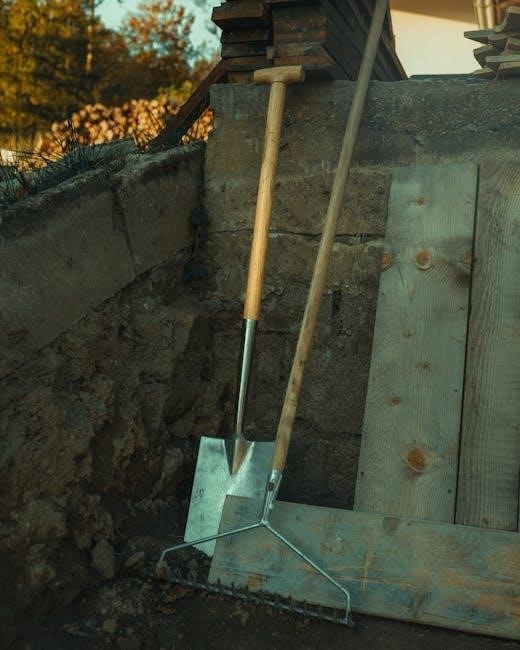
Proper handle maintenance is crucial for tool longevity and user safety. Regular cleaning prevents the buildup of grime, which can compromise grip and contribute to material degradation. Use a mild detergent and water, avoiding harsh chemicals that may damage the handle material – especially plastics. Thoroughly dry the handle after cleaning to prevent corrosion or swelling.
Inspect handles regularly for cracks, chips, or wear. Damaged handles should be repaired or replaced immediately to avoid injury. For wooden handles, occasional oiling can prevent drying and cracking. Metal handles may require rust prevention treatments.
Preventative measures include proper storage – avoiding extreme temperatures and humidity – and careful handling to minimize impacts. Storing tools in a dry environment extends handle life. Addressing minor damage promptly prevents it from escalating into more significant issues, ensuring continued safe and effective tool use.
Cleaning and Storage
Consistent cleaning is paramount for maintaining handle integrity and hygiene. After each use, remove dirt, grease, and debris with a damp cloth. For stubborn residue, a mild soap solution is recommended, ensuring thorough rinsing and drying afterward. Avoid abrasive cleaners that can scratch or damage handle surfaces, particularly plastic or coated metal.
Proper storage significantly extends handle lifespan. Tools should be stored in a dry, climate-controlled environment, away from direct sunlight and extreme temperatures. A tool chest or rack is ideal, preventing handles from rubbing against each other and sustaining damage. Avoid storing tools in damp basements or exposed outdoor areas, as this can lead to rust or material degradation.
Regularly inspect storage areas for pests that could damage wooden handles. Consider using desiccant packs to absorb moisture and maintain a dry storage environment, preserving handle quality for years to come.
Handle Repair and Replacement
Minor handle damage, like small cracks in wood or plastic, can sometimes be repaired using appropriate adhesives. Epoxy resins are often effective for wood, while specialized plastic adhesives work best for synthetic materials. Ensure the repaired area is thoroughly clamped during the curing process for optimal strength.
However, severely damaged handles – those with significant cracks, breaks, or material degradation – should be replaced entirely. Attempting to repair extensively damaged handles compromises safety and tool performance. Interchangeable handle systems simplify replacement, allowing for quick and easy swapping of damaged handles.
When replacing a handle, ensure the new handle is compatible with the tool’s shaft and intended application. Always prioritize safety; a faulty handle can lead to injury. If unsure about repair or replacement, consult a qualified tool technician for professional assistance.
Preventative Measures to Extend Handle Life
Regular cleaning is paramount for handle longevity. Remove dirt, grime, and residue after each use with a mild detergent and water, then thoroughly dry the handle. For wood handles, occasional oiling prevents drying and cracking, maintaining flexibility and strength. Avoid prolonged exposure to extreme temperatures and direct sunlight, which can degrade materials.
Proper storage is crucial. Store tools in a dry environment, preventing moisture absorption that can lead to corrosion or material breakdown. Avoid dropping or subjecting handles to unnecessary impact, as this can cause cracks or fractures. Inspect handles regularly for signs of wear and tear, addressing minor issues before they escalate.
Using tools for their intended purpose also extends handle life. Avoid using screwdrivers as chisels or hammers, as this stresses the handle beyond its design limits. Ergonomic considerations, like proper grip and technique, reduce strain and wear.